
San Rafael, CA · Garage Door Service
What Happens to Your San Rafael Garage Door Opener When the Power Outages Out
San Rafael's openers from the 1960s-90s wiring era react differently to short power outages than new units. Here's what local housing stock means for your door.
- Repairs & new doors
- Springs & openers
- Serving 5 nearby communities
The Problem
San Rafael's housing stock runs older than most buyers expect. Permits here mostly run 1938 to 1996, with the median landing right around 1960. That puts a huge share of garage door openers in this town on circuits wired decades before today's electrical code existed, often sharing an outlet with a chest freezer, a shop light, or an old chargers for yard tools. When the power outages, even for a few seconds, these older circuits don't always let the opener reset the way a modern GFCI-protected line does.
The symptom is almost always the same: the opener board loses its memory of where the door sits in its travel. Limit switches that told it "fully open" or "fully closed" go blank, and the unit won't answer the wall button or the remote until somebody climbs up and does a manual reset at the motor head. On a door that's already due for spring or cable work, that reset can mask a bigger problem underneath. A dead opener after a power outage isn't always a dead opener - sometimes it's an old circuit doing exactly what an old circuit does.
What Local Conditions Do
San Rafael sits in a mild temperate band, not a desert or a deep-freeze market. That matters for diagnosis. In places that swing hard between extreme heat and cold, opener failures after a power event often trace back to a motor capacitor that was already stressed by temperature. Here, that's rarely the cause. The mild climate means the motor itself usually isn't the weak link - the circuit feeding it is.
That shifts where we look first. In a town built mostly in that 1960s-70s wave, the wiring age matters more than the weather ever will. Neighborhoods like Greenbrae, just southwest of the core, and Santa Venetia sit inside that same building window, and openers there show the identical pattern: a brief outage, then a board that won't talk to the limit switches until it's reset by hand. It's not a San Rafael-specific flaw in the opener - it's a San Rafael-specific age in the wiring behind it.
What to Check
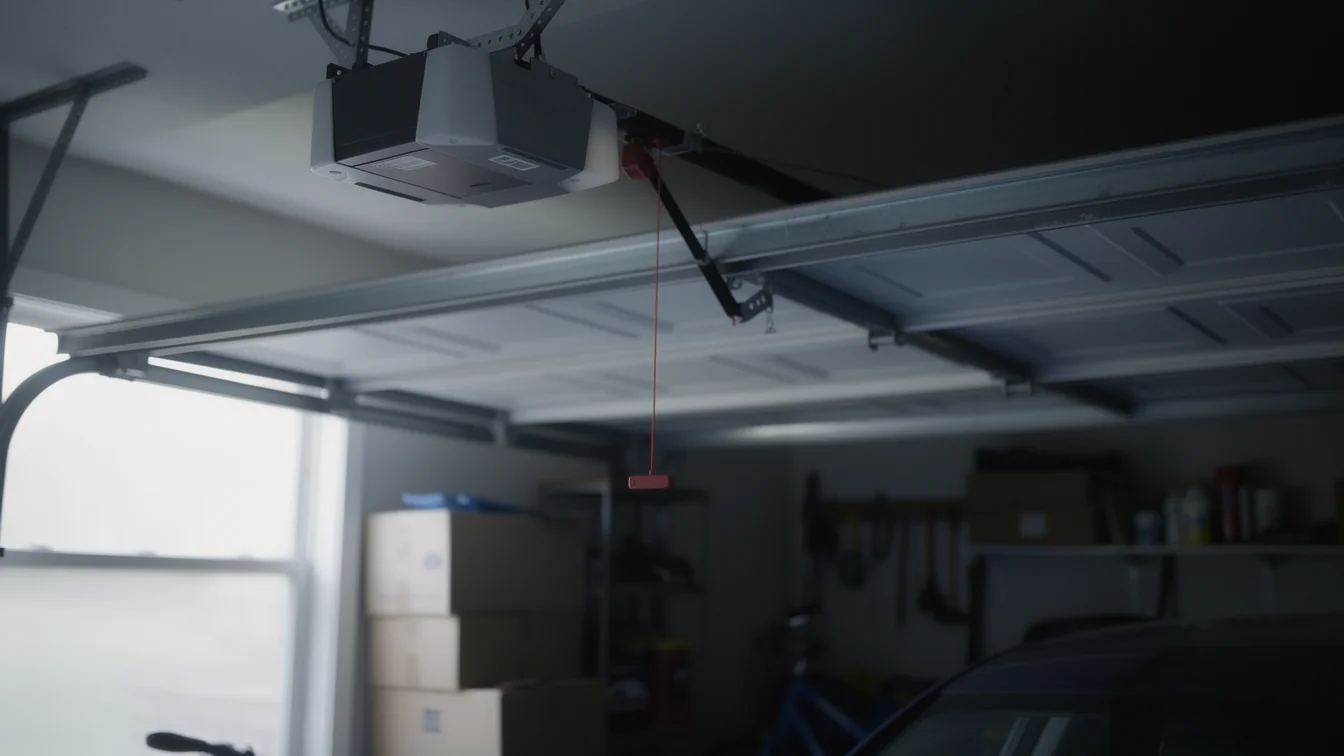
Before you call anyone, there are a few things worth looking at yourself. First, find the manual release cord - the red handle hanging from the trolley - and confirm it actually disengages the door from the opener. In homes from that 1960-ish building era, this cord sometimes hasn't been pulled in years and can bind.
Second, check whether your opener has a battery backup unit. Many openers installed before battery backups became standard simply don't have one, which means any power outage, however short, drops the door's brain completely rather than switching to reserve power.
Third, look at the outlet and breaker the opener runs on. If the house dates to that mid-century wave common across this area, the circuit may be original, unlabeled, or shared with something else in the garage. A flickering light on the same circuit during a storm is a clue the opener isn't getting clean power even before an outage hits.
Last, after any outage, watch the opener's first full cycle. If it reverses partway or won't fully seat, the limit switches need resetting - that's a five-minute fix, not a new unit.
The Common Mistake
The mistake we see most is replacing the opener and assuming that solves it. If the real issue is a 1960s-era circuit that can't hold a clean reset after a power outage, a brand-new opener on that same wiring will show the exact same symptom within the first storm season. The opener isn't the problem; the power delivery to it is.
We'll be straight about our limits here: we service and replace openers, springs, cables, and tracks, but we don't rewire houses. If a circuit needs its own breaker, a dedicated line, or a panel upgrade, that's an electrician's job, and we'll tell you that instead of selling you a unit that will fail the same way. Spending money on a new opener before fixing a bad circuit is money spent twice.
Frequently asked questions
Why does my garage door opener stop working every time the power blinks, even for a second?
In a lot of San Rafael homes built in that 1960s window, the opener runs on an older circuit that doesn't hold through a brief outage the way a modern GFCI line does. The board loses track of the door's position and needs a manual reset at the motor head. It's usually the wiring, not the opener itself.
Should I add a battery backup to my opener?
If your opener doesn't already have one, a battery backup will keep the door working through a short outage instead of locking up. Many openers installed before backups were standard don't have this feature, which is common in homes from San Rafael's older building stock.
Can the mild weather here cause opener failures like it does in hotter climates?
Not really. San Rafael's mild temperate climate means opener motors here rarely take the heat stress that causes capacitor failures in hotter markets. When an opener fails after a power outage in this area, it's almost always the circuit or the limit switches, not heat damage to the motor.
Related garage door services in San Rafael
More garage door guides
Book garage door service in San Rafael
Call now or request a quote - tell us what the door is doing and where you are.