
San Rafael, CA · Garage Door Service
Why Your San Rafael Garage Door Lets In Cold Air
San Rafael homes built 1938-1996 use seal styles that dry out fast in our mild climate. Here's what to check before cold drafts and bugs get into your garage.
- Repairs & new doors
- Springs & openers
- Serving 5 nearby communities
The Problem
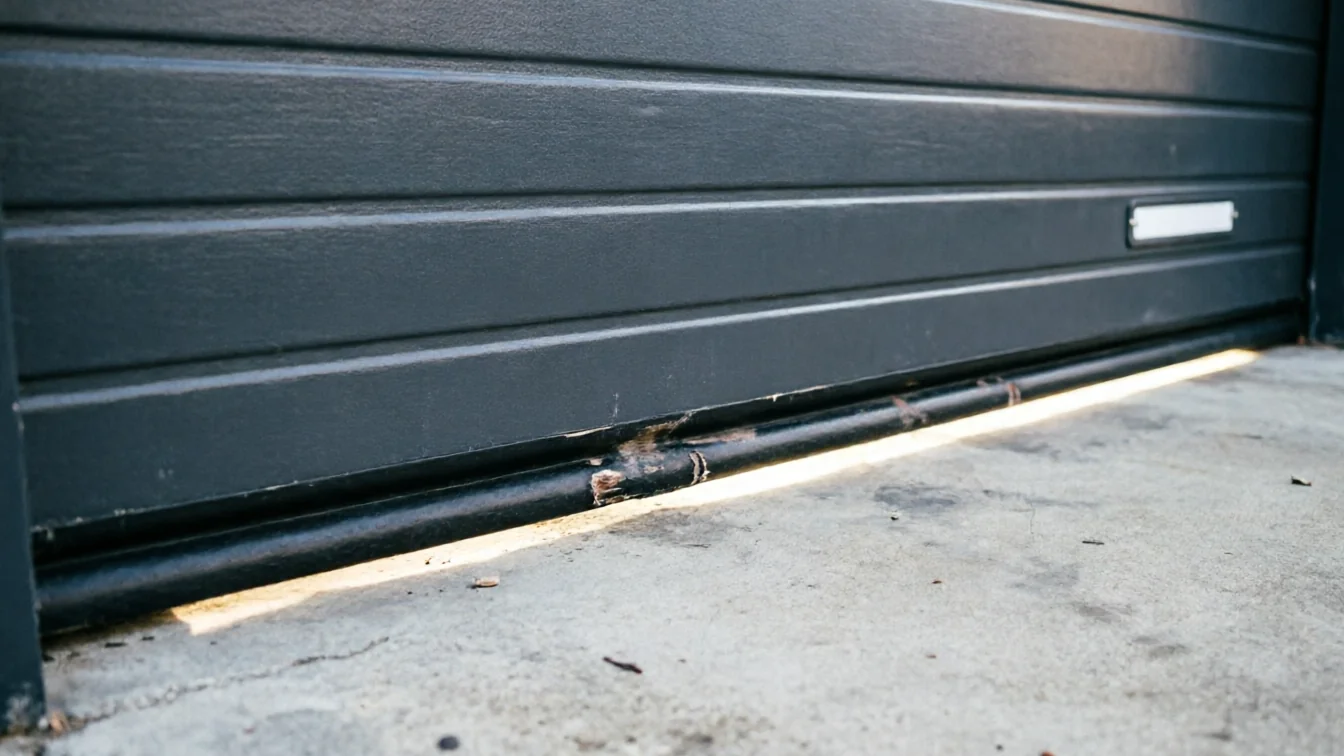
Most of the garage doors we look at around San Rafael went in with houses built between 1938 and 1996, with a lot of that stock dating to around 1960. The bottom seal and side seals on a door that age were picked for a door installed decades ago, and vinyl doesn't age the same way the door itself does. It cracks, flattens, and pulls away from the track long before the panels show any wear. You notice it as a thin line of daylight under the door, a draft across the garage floor, or leaves and small bugs working their way in along the bottom edge.
Because so much of the housing here dates from that same 1960s-70s window across the 38 named areas in this part of Marin, the seal problem isn't a one-house issue. It's a batch issue. If your neighbor's door seal gave out two winters ago, yours is probably close behind, especially if nobody's touched it since the door went in.
A gap you can slide a finger under isn't cosmetic. It's an open path for cold air, moisture, and anything small enough to crawl through.
What Local Conditions Do
San Rafael sits in a mild temperate band, not the kind of climate that cracks a seal in one hard freeze. What gets you here is the opposite: steady, moderate temperature swings day after day, year after year, that slowly bake the plasticizers out of an old vinyl bottom seal until it stops flexing and starts cracking. In a harsher climate a seal fails fast and obviously. In a mild one it fails slowly, and a lot of owners don't notice until the draft is bad enough to feel standing in the garage.
That slow failure also means a seal that looks fine from six feet away can already be stiff and non-sealing up close. Press a thumb into the vinyl. If it doesn't spring back, it's done, even if there's no visible crack yet.
Humidity plays a smaller role here than in wetter climates, but a mild, damp morning followed by a dry afternoon still works the material over time. It's not dramatic weather doing the damage. It's the ordinary daily cycle, repeated for years on a door nobody re-seals until something finally gives.
What to Check
Start at the bottom seal, the retainer channel at the base of the door. If the vinyl is flat on one side instead of rounded, it's compressed and no longer sealing against the slab. Next, check the side and top seals along the frame, called weatherstripping or the jamb seal. On houses from the 1960s-70s era common across this part of Marin, these are often the thin stick-on foam strip or an aluminum retainer with aging vinyl, neither of which does much once it's hardened.
Check the corners where the bottom seal meets the side seals. That's the spot drafts concentrate, and it's usually the first place a gap opens.
Last, run a hand along the inside of the door at panel seams, especially if the door is original to a house from this build period. Panel seams on older doors can separate slightly at the screws over the decades, and that's a different repair than seal replacement, so it helps to know which one you're actually dealing with before you buy parts.
The Common Mistake
The mistake we see most is replacing the bottom seal and stopping there. On a door that's been in place since the 1960s-70s building wave common to this area, the bottom seal usually isn't the only thing that's failed, it's just the easiest to see. The side and top seals are often just as hard and just as gapped, and skipping them means the draft just moves up a foot.
The other mistake is assuming a new seal fixes a door that's actually out of level. If one side of the door sits lower than the other, no seal, no matter how new, closes that gap evenly. That's a track or hardware issue, not a weatherstripping issue, and it's worth ruling out before buying parts twice.
Honest limitation: we can swap seals and adjust track, but we don't re-skin or rebuild a door whose panels have genuinely warped from decades of exposure. At that point, a full replacement door usually costs less over time than chasing seals on a door that's structurally tired.
Frequently asked questions
How often should I replace garage door weather seals in San Rafael?
There's no fixed schedule, but on houses built in the 1960s-70s window common here, check the bottom seal every year or two. Mild, steady temperature cycling dries vinyl out slowly, so it often looks fine until you press on it and feel it's gone stiff.
Why do I feel a draft even after replacing the bottom seal?
Usually the side or top seals are just as worn as the bottom one but less visible. On older doors from this area's main building era, all three seals tend to fail around the same time, so replacing only the bottom one often leaves the draft coming in higher up.
Can a seal fix a door that lets in bugs along one bottom corner?
Sometimes, but check whether the door sits level first. A door slightly out of level concentrates gaps at one corner no matter how new the seal is. If it's level and still gapping there, the seal itself is likely the fix.
Related garage door services in San Rafael
More garage door guides
Book garage door service in San Rafael
Call now or request a quote - tell us what the door is doing and where you are.