
San Rafael, CA · Garage Door Service
Why a Garage Door Goes Off Track in San Rafael
San Rafael's 1938-1996 housing stock and mild coastal climate both play a role in tracks bending or doors jumping rail. Here's what causes it and what to check first.
- Repairs & new doors
- Springs & openers
- Serving 5 nearby communities
The Problem
A door that's off track doesn't usually happen in one dramatic moment. It happens over years, and in San Rafael that timeline is longer than most places because so much of the housing here dates back further. With a median build year around 1960 and most of the stock going up between 1938 and 1996, a lot of these garages still have their original track brackets, or replacements installed decades ago that were never upgraded to current standards.
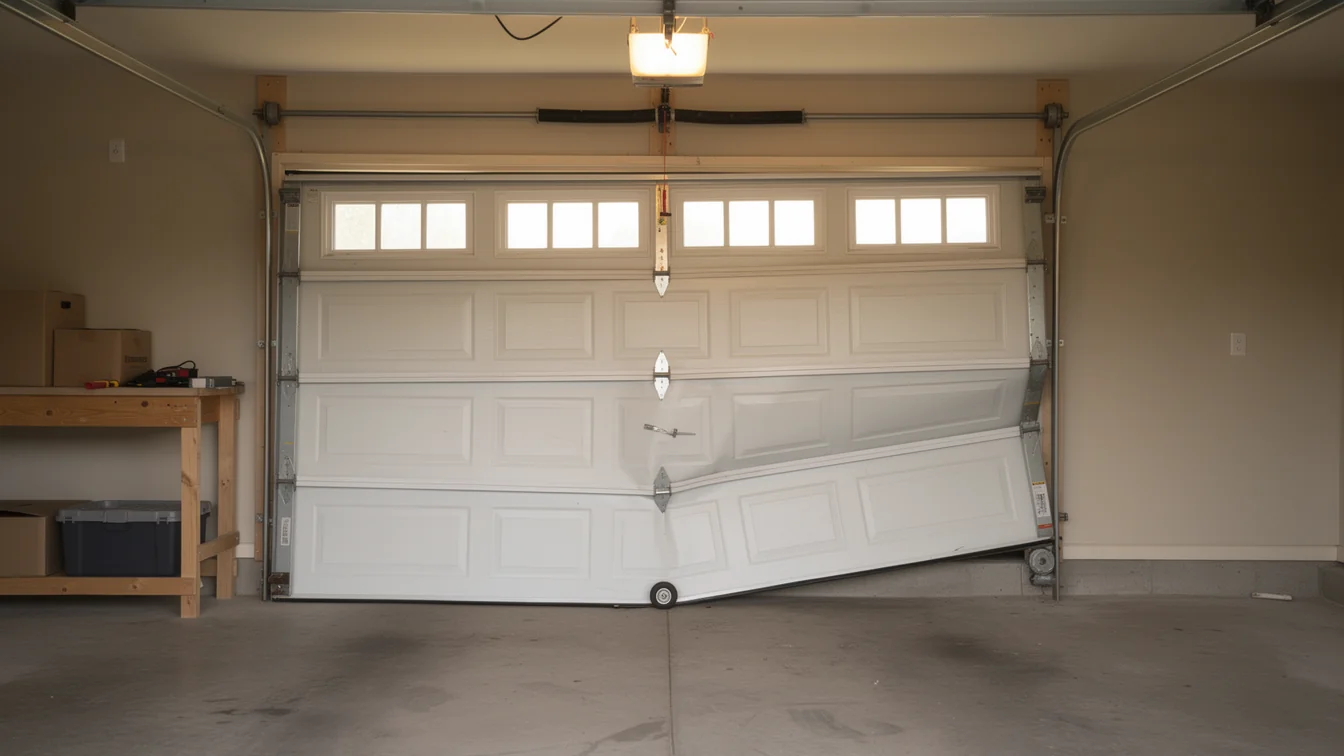
When a door comes off track, you'll usually see one of two things: the door hangs crooked at an angle, with one bottom corner lower than the other, or it simply won't move at all and the opener strains against something that won't budge. Sometimes a roller has jumped the track entirely and sits wedged against the frame. None of this is a DIY fix - a door under spring tension that's partially derailed can come down fast, and the track edges are sharp enough to cut.
The root causes are almost always mechanical: a bent track rail, a loose or pulled-away bracket, a broken roller, or hinges that have worked loose enough to let the panel wander sideways as it travels. On an older door, metal fatigue in the track itself is common enough that we check for it as a first step, not an afterthought.
What Local Conditions Do
San Rafael sits in a mild temperate band - no hard freezes, no extreme summer heat - which sounds like it should be easy on a garage door, and in some ways it is. You don't get the frost-heave or expansion-contraction cycles that crack slabs and shift foundations in colder climates. But mild and stable isn't the same as inert.
What the mild coastal climate does instead is let hardware age quietly without the seasonal stress that would otherwise force a homeowner to notice a problem early. In a place with harsh winters, a loose bracket usually announces itself within a season or two because freeze-thaw movement makes things worse fast. Here, a slightly bent track or a bracket with pulled screws can sit for years, working looser a little at a time, with nothing dramatic enough to make it obvious - until the day the door finally jumps the rail.
Combine that slow-drift pattern with housing stock running from 1938 to 1996, and you get a lot of garages where the track hardware has simply never been retensioned or realigned since whenever it was last touched, which in some of these houses could be decades.
What to Check
Start by looking at the track itself, both sides, from the floor up to where it curves into the horizontal section near the ceiling. You're looking for gaps between the bracket and the framing, for rust or bends in the rail, and for rollers that look chipped or that sit loose in their housing rather than snug against the track.
Next, check the brackets that hold the track to the wall studs or framing. On the older end of San Rafael's housing stock - anything built before the 1970s especially - these were often fastened directly into original framing that's shifted slightly over sixty-plus years. A bracket that's pulled even an eighth of an inch away from the wall can let the whole track flex every time the door runs.
Look at the bottom rollers last. These take the most abuse because they carry the weight of the door through the turn at the floor, and on a door that's fifteen-plus years old, worn rollers are often the first domino that leads to a track knocked out of alignment. If a roller looks egg-shaped instead of round, that's your answer.
If the door is visibly crooked or won't move, stop. Don't force the opener and don't try to muscle the panel back into the track yourself.
The Common Mistake
The mistake we see most in San Rafael is homeowners trying to fix the symptom instead of the cause. Someone notices the door looks crooked, pushes the panel back into the track by hand, and calls it fixed. It'll run fine for a week, sometimes a month, and then it's back in the same spot - because the bracket that let it slip in the first place never got re-secured.
The other version of this mistake is waiting too long because the door still opens. Given how mild the climate is here, a door with a slightly bent track can keep functioning, roughly, for a long stretch before it fails outright. That's exactly the window where a $20 bracket fix turns into a bent track that needs replacing, or a roller assembly that's worn enough to damage the track permanently on its way out.
We'll say plainly: if your door is more than a couple inches off level or if a roller has fully left the rail, that's not a tighten-the-screws job anymore. At that point you're choosing between a track repair and a full track replacement, and on an older door it's worth having someone look at the whole assembly rather than patching one spot and leaving the rest of sixty-year-old hardware to fail next.
Frequently asked questions
Why does my garage door look crooked when it opens?
That's usually a bracket that's pulled away from the framing or a bent section of track, letting one side of the door travel further than the other. On San Rafael homes built before the 1970s, original brackets fastened into older framing are a common culprit. It's not safe to force the door - the crooked travel usually gets worse, not better, on its own.
Can mild weather really affect a garage door track?
Indirectly, yes. San Rafael's mild temperate climate doesn't stress hardware the way freeze-thaw cycles do elsewhere, so problems that would announce themselves quickly in a harsher climate instead develop slowly here - sometimes over years - before the door finally jumps the rail.
Is an off-track door always a track replacement?
No. Often it's a loose bracket or a worn roller, both cheaper fixes than a new track. But once the track itself is visibly bent or the door is more than a couple inches out of level, patching one spot usually isn't enough - the rest of the hardware needs a look too.
Related garage door services in San Rafael
More garage door guides
Book garage door service in San Rafael
Call now or request a quote - tell us what the door is doing and where you are.