
San Rafael, CA · Garage Door Service
Is Your San Rafael Garage Door Worth Repairing, or Time to Replace?
Most San Rafael homes date to the 1960s. Here's how to tell if your original door and hardware are still worth repairing or if it's time to replace.
- Repairs & new doors
- Springs & openers
- Serving 5 nearby communities
The Problem
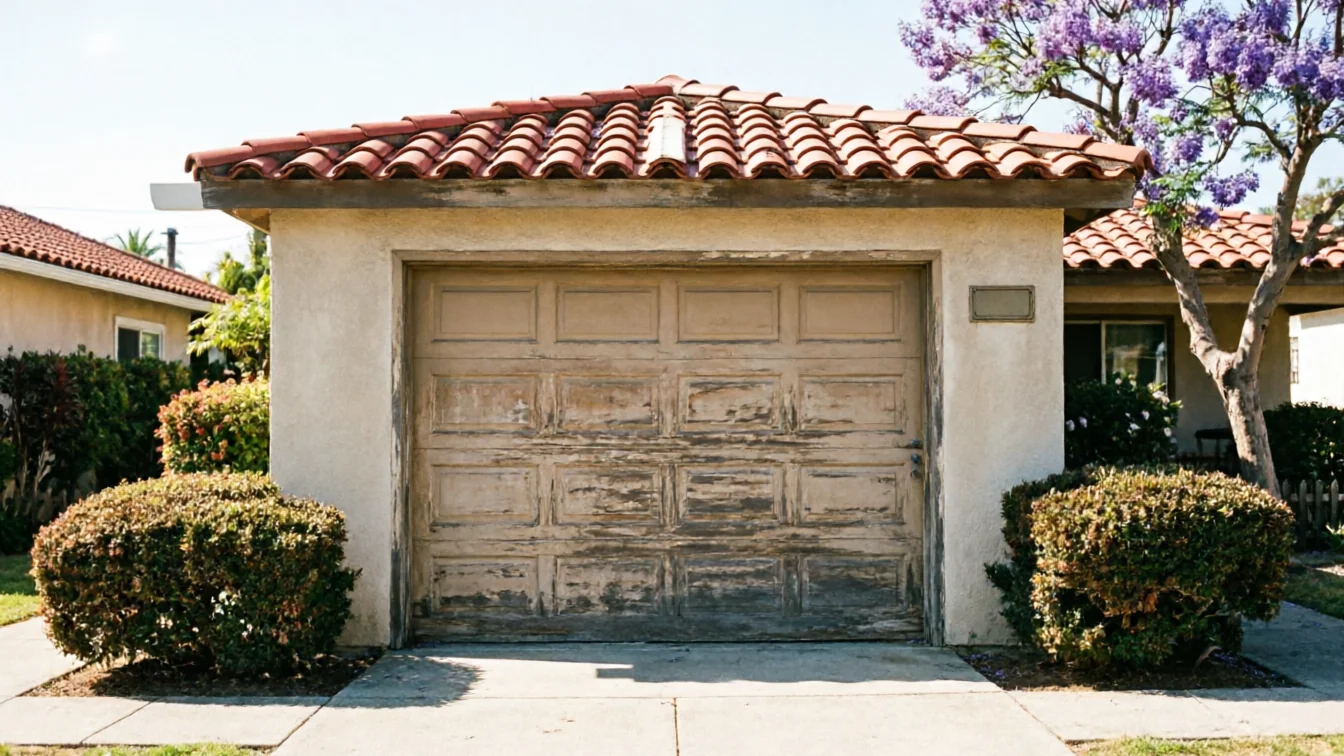
Walk through most San Rafael neighborhoods and you're looking at houses built between 1938 and 1996, with the bulk going up in the 1960s and 70s. That means a lot of original garage doors and original hardware are still hanging on tracks that are older than the owners calling us. The door itself might be a single steel panel with no insulation, hung on a torsion spring sized for a lighter door than what's sometimes been bolted onto it since. The question we get asked constantly isn't "can you fix this" - almost anything can be patched for a while - it's whether fixing it is actually the smart move on a door this old, or whether you're pouring money into hardware that's past the point of being worth saving. There's no single right answer. A door from a 1962 build in Santa Venetia or Greenbrae can have completely different bones than one from a 1990s build near Lucas Valley-Marinwood, even though both count as "older" doors in this town.
What Local Conditions Do
San Rafael sits in a mild temperate band, and that cuts both ways for an old door. You're not dealing with freeze-thaw cycles cracking panels or extreme heat warping track alignment the way homes in harsher climates do, so a lot of what fails here is just age and use - springs that have done their cycle count, rollers that have worn their bearings out, cable that's frayed from decades of the same door going up and down. The upside is that a well-maintained original door in this climate can genuinely run longer before it needs full replacement than the same door would somewhere with real winters. The downside is that mild weather doesn't force anyone to notice a problem early. A door that would get replaced out of necessity elsewhere just keeps limping along here until a spring lets go or a cable snaps. That's usually the actual trigger for the call, not a slow decline anyone saw coming.
What to Check
On a house from the 1960s or 70s - which describes most of the stock in this service area - start with the spring. If it's the original torsion spring, it was sized for the door as built, not for whatever's been added since, like a second layer of insulation board or a replaced steel skin. Second, check the track mounting: a lot of these doors use side-mounted hardware that's hard to find replacement parts for today, which matters if a repair needs a specific bracket. Third, look at the panel itself for rust at the bottom edge where moisture collects, and check whether the door is still square in the opening - older houses settle, and a door that doesn't sit true anymore puts uneven load on hardware that's already decades old. None of this tells you to replace outright. It tells you whether the next repair is a thirty-minute fix or the first of several.
The Common Mistake
The mistake we see most in this part of San Rafael is people replacing a working spring or cable on an old door without checking whether the opener and track were ever matched to begin with. If someone put a heavier insulated door on decades ago and never upsized the spring, you can fix that one component and have it fail again in under a year - not because the repair was bad, but because the parts around it were already mismatched. With median household income in this service area over $137,000, a lot of owners can comfortably choose full replacement when it makes sense, and sometimes that's the right call instead of chasing one part at a time. Here's the honest limit: we don't try to source exact-match parts for every original 1960s mechanism. Some of that hardware just isn't made anymore, and matching it exactly isn't worth the wait when a standard replacement spring does the same job.
Frequently asked questions
My house in San Rafael was built in the 1960s - is the original garage door still safe to use?
It can be, depending on condition. Age alone doesn't make a door unsafe, but original torsion springs from a 1960s build have usually done more open-close cycles than they were rated for. Worth having the spring and cable checked rather than waiting for one to fail.
Does San Rafael's climate wear out garage doors faster?
No - the mild temperate conditions here are easier on doors than regions with hard freezes or extreme heat. Most failures we see are from age and cycle count, not weather damage, which is actually why some original doors last longer here than elsewhere.
How do I know if my door's hardware was ever upgraded?
Check whether the spring size matches the door's current weight - if panels or insulation were added over the years without resizing the spring, the hardware is mismatched. That's common in older housing stock where owners replace a panel but not the spring behind it.
Is it worth replacing just the spring on an old door?
Often yes, if the track, rollers, and panel are still square and sound. But if you're also seeing rust at the panel base or the door doesn't sit true in the opening, a spring swap alone may not hold for long.
Related garage door services in San Rafael
More garage door guides
Book garage door service in San Rafael
Call now or request a quote - tell us what the door is doing and where you are.